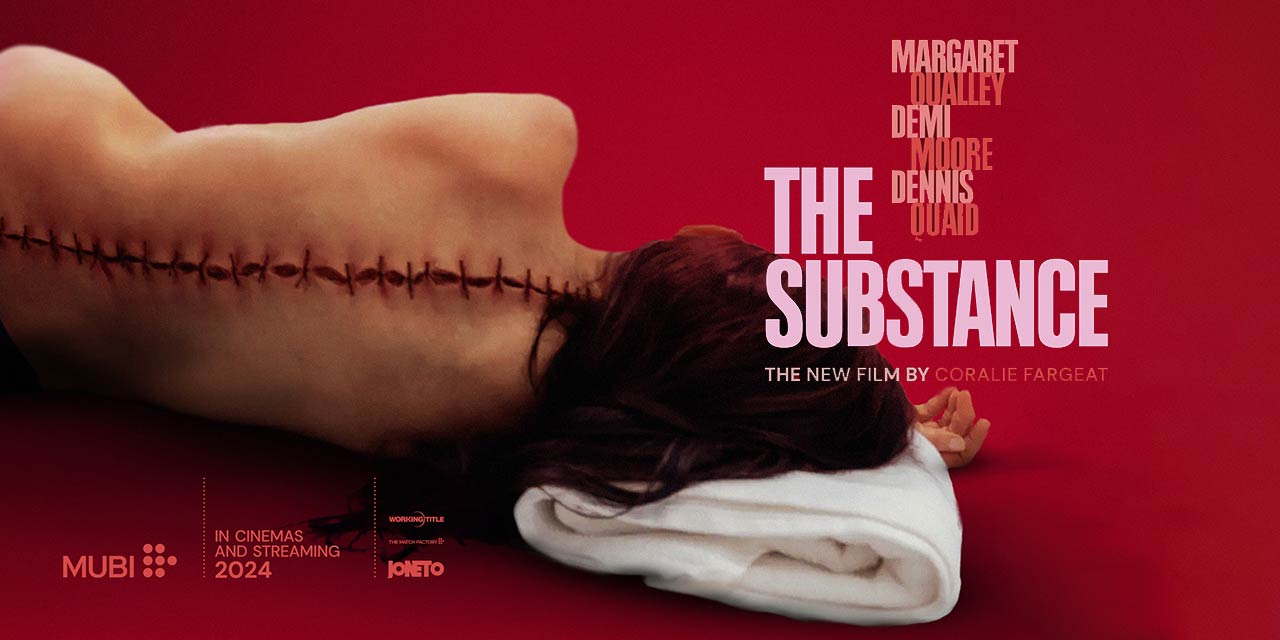
Ever dreamed of becoming a better version of yourself? If so, consider checking out The Substance. This wild journey of body horror will challenge—and possibly change—your views on self-modification in a world driven by Ozempic. Buckle up for this mind-bending ride!
The Substance premiered in May 2024 at the 77th Cannes Film Festival and was selected to compete for the Palme d’Or in its main competition section, where French director Coralie Fargeat won Best Screenplay.

As the tagline hints, this film aims to change your life. Society’s discomfort with aging is just the tip of the iceberg in The Substance. Demi Moore plays a fading celebrity who turns to a black-market drug—a cell-replicating substance that temporarily creates a younger, more flawless version of herself, portrayed by Margaret Qualley. But when the drug requires a delicate balance, what could possibly go wrong?
Hollywood’s dark fixation on beauty and the fear of aging take center stage delivering stunning cinematography and powerhouse performances by Demi Moore and Margaret Qualley. This gut-wrenching film is not for the faint of heart—or stomach. It’s no surprise that some viewers walked out or even became ill. Barf bags might be essential for this one. With Demi Moore at her best, many are already saying The Substance could do for her what Pulp Fiction did for John Travolta.

Wendy Ide of The Guardian praised The Substance for the film’s feminist perspective of older women, making note of how other female-led horror films like Carrie or Rosemary’s Baby center on themes of menstruation and childbirth. She wrote that The Substance, in contrast, “not only offers a female perspective on women’s bodies, but also argues that things only start to get properly messy once fertility is a dim memory.” The movie serves as a mirror for audiences to look more closely inward as to what kinds of standards we’ve set.
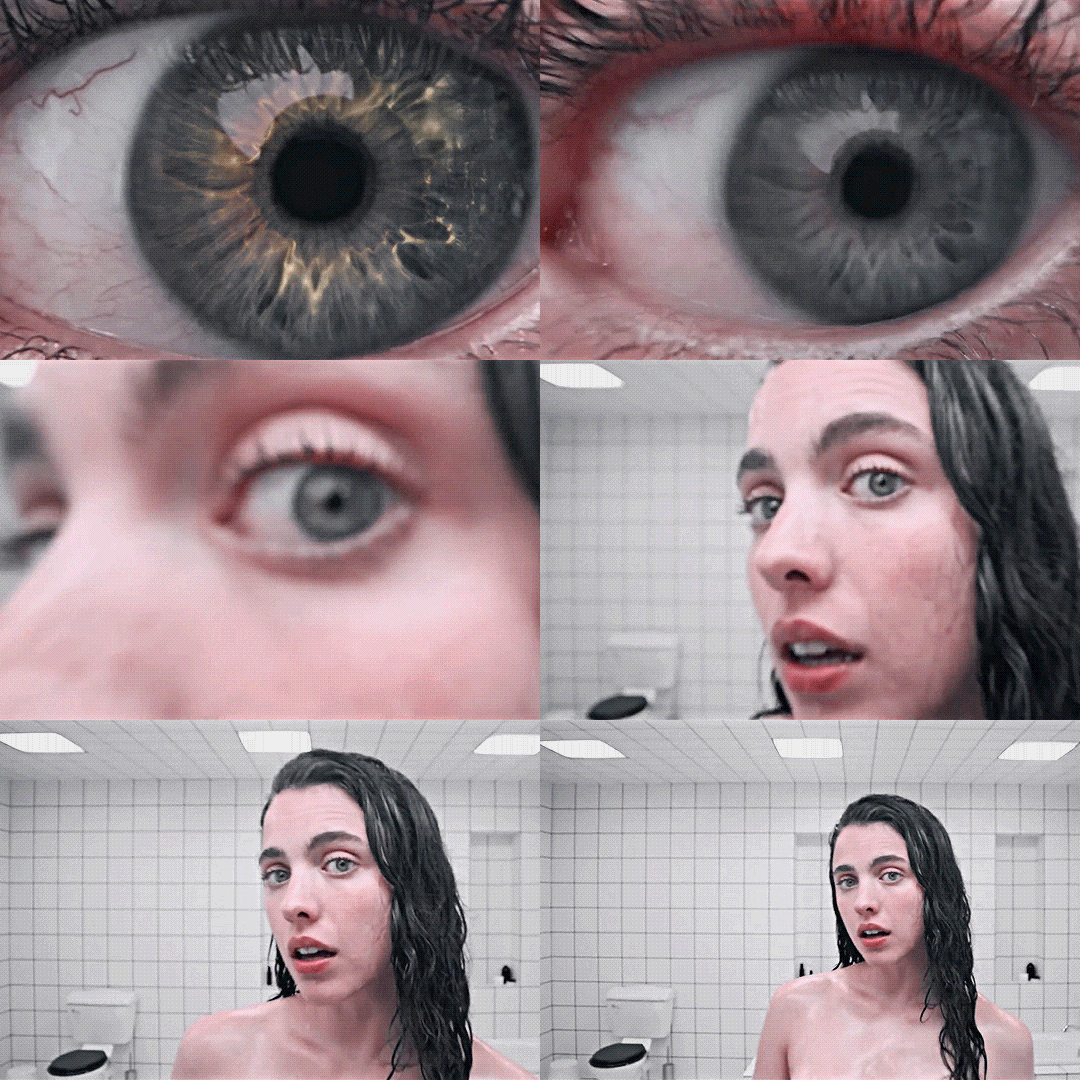
Moore’s been in the spotlight since the ’80s – a talented, and at the time troubled, member of Hollywood’s “Brat Pack.” On-screen she dazzled, in films like St. Elmo’s Fire and About Last Night. Off-screen, she struggled with self-esteem. “I just have a lot of compassion for what a scared little girl I actually really was, even though I didn’t let anybody see that,” she said. “And if I could go back, I would give her a hug and say, ‘It’s OK. It’s OK.'”
“What really struck me was the harsh violence against oneself,” Demi Moore said in a recent interview by The Guardian. “It’s not what’s being done to you, it’s what we do to ourselves.”
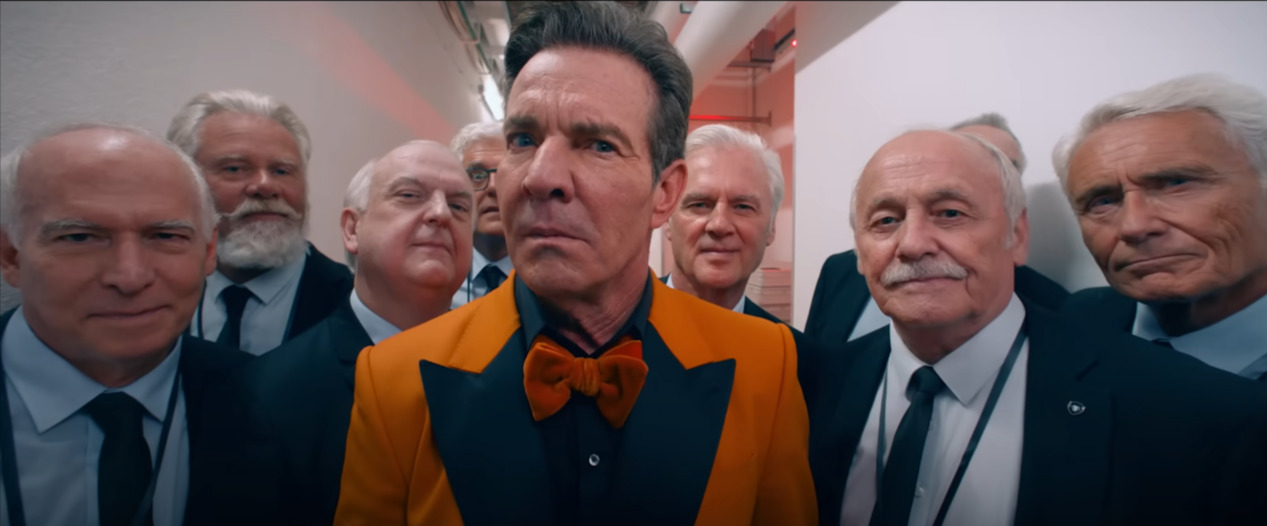
After hearing all the hype, I had a sense of what to expect. However, the movie lost me in the third act. While the effort and message were clear, it felt silly and redundant. It’s no surprise this film was the most divisive at the Cannes Film Festival, even among critics like myself. The grotesque, over-the-top third act felt repetitive, and I kept thinking, “We get it.” While it undeniably delivers a timely and urgent message, the execution felt overly forced and jarring. Will I watch it again? Absolutely not. Am I glad I saw it? Absolutely yes.


 On the Screen Reviews
I want to see this. I hope it’s going to be available at my local multiplex this coming weekend though it is unlikely as art films tend to go away after a week or 2. Still, I am intrigued by the premise as I’m also a sucker for a good body-horror film.
If you’re a sucker for good body-horror, this is for you!